Table of Contents
The 500-km Demo: What Makes It a First for Japan
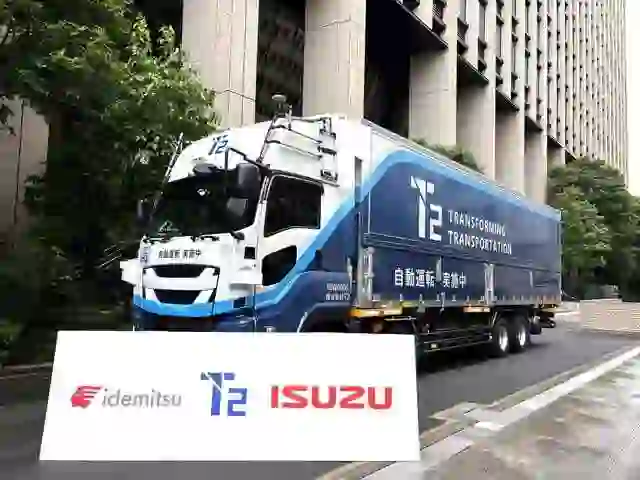
On July 6, 2026, T2, a leading Japanese autonomous vehicle developer, teamed up with an energy company and a logistics operator to unveil a pilot program for an autonomous truck running on 100% biofuel. The stage is a 500-km stretch of a high-speed freight corridor linking east and west. Built around the new IRD fuel, the project aims to prove that zero-emission logistics is not just possible but practical for the next generation of freight transport.
Testing a new fuel and autonomous driving at the same time is a major step for Japan's logistics industry. This article walks through the partnership, how IRD fuel works, what the demo drive involves, and the hurdles that remain before commercial rollout.
The Three-Way Partnership and Its Goal
The collaboration brings together a national energy firm, autonomous truck maker T2, and a logistics operator, with a clear division of labor.
- Energy company: supplies IRD fuel, a next-generation renewable diesel derived from vegetable oils and animal fats
- T2: provides the vehicle platform and the software stack that navigates the freight corridor
- Logistics operator: runs the truck on a dedicated high-speed route between the eastern and western coasts, a 500-km stretch already used for commercial freight
Together, the three partners aim to demonstrate that a fully biofuel-powered autonomous truck can meet the performance, safety, and reliability standards required for commercial logistics. Japan is seeing a wave of similar projects, including the Idemitsu, T2, and Isuzu renewable-diesel autonomous truck launch.
How IRD Fuel Works and Why It Matters
- •Made from vegetable oils and animal fats
- •Far lower CO2 when burned
- •Works in existing diesel engines without major changes
- •Energy density comparable to fossil diesel
- •Made from fossil sources
- •Higher CO2 emissions
- •Baseline for existing engines
- •Reference for energy density
IRD fuel is a renewable fuel made by refining raw materials such as vegetable oil and animal fat into a diesel-like product. Because the production process accounts for the carbon dioxide tied to the feedstock's growth, the fuel emits far less CO2 when burned than conventional diesel.
From a maintenance and operations standpoint, two points stand out.
- It works in existing engines: IRD can be used in current diesel engines without major modifications, allowing fleets to transition smoothly
- No performance trade-off: according to the energy company, its energy density is comparable to fossil diesel, delivering high power output and long engine life
The energy company claims the fuel's energy density matches fossil diesel while delivering high power output and long engine life.
In short, the demonstration is a real-world answer to one question: can a biofuel truck match its fossil-fuel counterpart?
Inside the 500-km Demo Drive
The key conditions of the demonstration are as follows.
| Item | Details |
|---|---|
| Route | 500-km stretch of the east-west freight corridor, already used for high-speed commercial traffic |
| Top speed | 120 km/h |
| Load | Standard freight cargo |
| Duration | Several weeks |
| Measurements | Real-time fuel monitoring; performance, fuel efficiency, and emissions logged |
T2's autonomous truck will use its advanced sensor suite and AI navigation to maintain safe distances and obey traffic rules. The logged data will be compared against a conventional diesel truck running the same route, providing the evidence needed to validate IRD fuel for large-scale deployment.
What It Means for the Future of Freight
- •Transport is a significant share of CO2 emissions
- •Fuel transitions require costly fleet overhauls
- •Accident risk from human error
- •100% biofuel eliminates the truck's CO2 emissions
- •Existing diesel engines stay in service
- •Autonomy reduces human error and improves safety
If the pilot succeeds, it could mark a turning point for freight logistics. Transportation accounts for a significant portion of the carbon footprint, and a 100% biofuel-powered autonomous truck would eliminate those CO2 emissions.
Just as important, proving that renewable fuel drops into existing diesel engines means fleets would not need costly overhauls to decarbonize. The autonomous platform improves safety by reducing human error, while the fuel's lower emissions support Japan's climate targets. The data gathered will help regulators, fleet operators, and fuel producers judge whether the technology can scale across the country's extensive highway network. For a related effort combining the two technologies, see the next-generation biodiesel autonomous truck test targeting a 15% emissions cut.
Remaining Hurdles and What Comes Next
- •IRD still costs more to produce at scale than diesel
- •Feedstock supply chain must expand
- •Robust cybersecurity against hacking
- •Rules for fully autonomous freight still evolving
- •Prove consistency across weather and driving cycles
- •Roll out to other freight corridors
- •Partner with more logistics operators
- •Build a nationwide zero-emission network
Alongside the promise, the barriers to commercialization are clearly defined.
- Producing IRD at scale still costs more than conventional diesel, and the feedstock supply chain must expand
- Autonomous trucks need robust cybersecurity measures to guard against hacking
- The regulatory framework for fully autonomous freight vehicles is still evolving
- The fuel must prove consistent performance across different weather conditions and driving cycles
If the data confirms the fuel's reliability, the next step is rolling the technology out to other freight corridors and partnering with more logistics operators to build a nationwide network of zero-emission autonomous trucks.
Key Takeaways
- On July 6, 2026, T2 and its energy and logistics partners announced a demonstration of an autonomous truck running on 100% biofuel
- IRD fuel, made from vegetable oils and animal fats, works in existing diesel engines without major modifications and emits far less CO2 when burned
- The demo covers a 500-km east-west freight corridor at speeds up to 120 km/h over several weeks, comparing fuel use and emissions with a conventional diesel truck
- Hurdles include production cost, feedstock supply, cybersecurity, and regulation; success would open the way to a nationwide zero-emission trucking network
How close can renewable fuel plus autonomous driving get to everyday practicality? The next few weeks of data will shape the future of freight in Japan.