Table of Contents
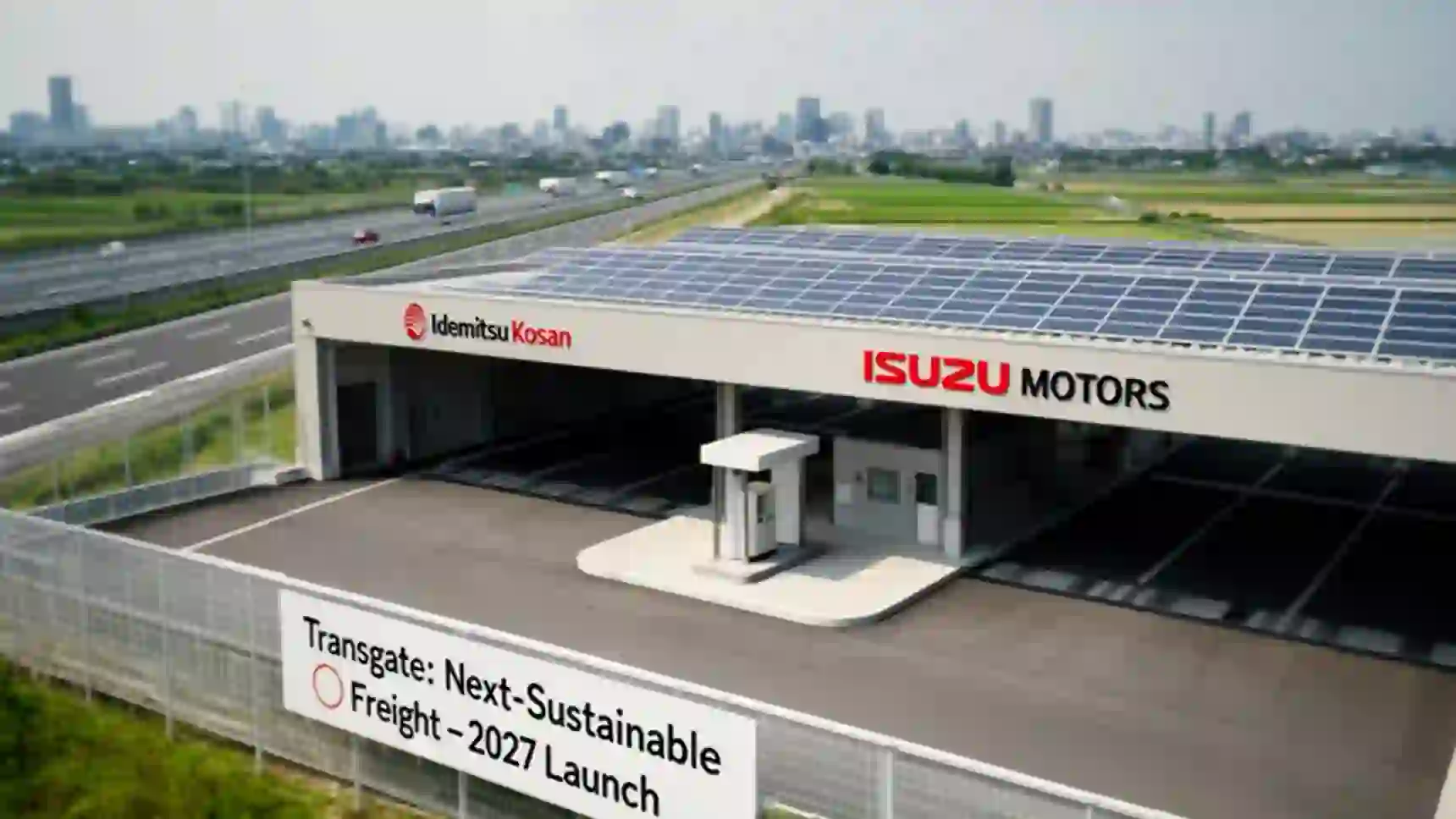
On July 2, 2026, a trio of Japanese industry leaders launched a partnership that could reshape freight logistics across the nation. Idemitsu Kosan supplies a new renewable diesel blend to T2's Level-2 autonomous trucks, with Isuzu providing maintenance support. The stage is the high-speed highway corridor linking Tokyo and Osaka: 500 km of range per fill and a significant cut in CO2 emissions for long-haul freight. This article breaks down what the partnership involves and why it matters, with diagrams throughout.
What's Happening: A Three-Company Alliance Launches July 2, 2026
Idemitsu Kosan, the long-standing oil refiner, supplies a new renewable diesel blend to T2's Level-2 autonomous trucks, while Isuzu provides maintenance support. The collaboration targets the high-speed highways between Tokyo and Osaka, promising a 500-kilometre range for each autonomous vehicle and a major reduction in CO2 emissions for long-haul freight.
What Is Renewable Diesel (IRD) -- and Why It Suits Autonomous Trucks
Renewable diesel, known as IRD (Idemitsu Renewable Diesel), is produced from refined oil-based feedstocks engineered to lower carbon intensity. What sets it apart from conventional diesel is practical: IRD can be blended with existing fuels without requiring major engine modifications.
- •High energy density
- •Proven reliability for long-haul work
- •Carbon intensity is the problem
- •Made from feedstocks engineered for lower carbon intensity
- •Blends with existing fuels
- •No major engine modifications required
That makes it an ideal candidate for the next generation of autonomous trucks. By integrating IRD into T2's autonomous fleet, the partnership aims to cut greenhouse-gas emissions while maintaining the high energy density and reliability that long-distance haulage demands.
Inside the Pilot: Level-2 Automation and a 500 km Range
The official launch date -- July 2, 2026 -- marks the start of a pilot program deploying IRD-fueled Level-2 autonomous trucks on the Kanto-Kansai corridor. Level-2 automation provides driver-assistance features such as adaptive cruise control and lane-keeping, but a human driver remains on board.
Thanks to efficient powertrains combined with IRD's high energy density, the trucks achieve a 500 km range -- enough to traverse the entire corridor without refueling. For freight operators, eliminating mid-trip fuel stops is a critical advantage.
Partnership Structure: Fuel, Vehicles, and Maintenance
Three companies sit at the heart of this initiative, each contributing its core strength.
Idemitsu's role extends beyond fuel supply: the company will monitor CO2 emissions and provide data to refine the fuel blend for future iterations. T2 focuses on integrating the fuel system into its autonomous platform, while Isuzu's maintenance expertise is crucial for keeping the fleet running smoothly on Japan's demanding highway infrastructure.
Environmental and Economic Impact: Up to 30% Less CO2
Japan's commitment to carbon neutrality by 2050 has spurred a wave of innovation in low-carbon fuels and autonomous technology. According to preliminary studies, using IRD is expected to reduce CO2 emissions by up to 30% compared with conventional diesel. On top of that, the autonomous trucks' ability to hold optimal speeds and reduce idling cuts fuel consumption even further.
- •Estimate from preliminary studies
- •Autonomous driving adds savings via optimal speed and less idling
- •Supports Japan's 2050 carbon-neutrality goal
The economics look promising too. Lower fuel expenses and reduced maintenance downtime could bring down operating costs for freight companies, while the 500 km range removes mid-trip refueling stops -- streamlining logistics and improving delivery times across the Kanto-Kansai corridor.
Future Outlook: More Routes, Then Level-3 and Level-4
While the 2026 launch focuses on a single corridor, the partners have outlined plans to expand the autonomous fleet to other major routes in Japan. The pilot's results will inform the development of higher-level autonomous systems, potentially moving toward Level-3 or Level-4 automation in the coming years.
Idemitsu is also exploring how renewable diesel can be combined with other low-carbon technologies, such as electric powertrains and hydrogen fuel cells, to build a diversified portfolio of sustainable fuels for the transportation sector.
Conclusion: A New Standard for Sustainable Logistics
The July 2026 launch of Idemitsu's renewable diesel for T2's autonomous trucks represents a pivotal step toward a cleaner, more efficient freight network in Japan.
- •Up to 30% less CO2 (projected)
- •Real-world track record for low-carbon fuel
- •A step toward carbon neutrality
- •500 km with no refueling stops
- •Lower fuel costs and less downtime
- •Faster Tokyo-Osaka deliveries
By combining cutting-edge fuel technology with advanced automation, the partnership sets a new standard for sustainable logistics -- one that could inspire similar initiatives worldwide.