Table of Contents
Silicon Nitride Bearing Balls: A Rising Powerhouse in High‑Performance Applications
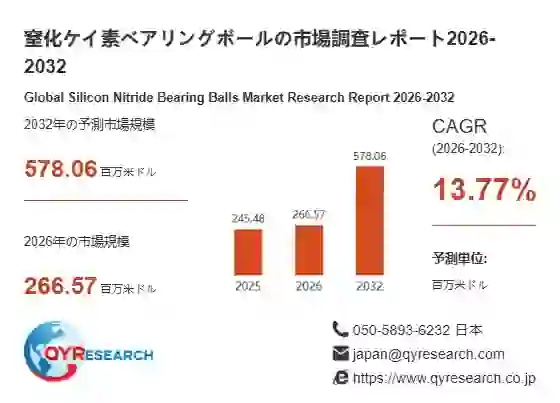
Silicon nitride (Si3N4) bearing balls have emerged as a cornerstone of modern machinery, offering a blend of hardness, strength, and thermal stability that outperforms traditional steel counterparts. According to a recent market analysis, the global market for these advanced ceramic bearings is projected to reach USD 266.57 million by 2026, expanding at a compound annual growth rate of 13.77% from 2025 to 2032. This rapid ascent reflects the growing demand for high‑speed, high‑precision, and high‑temperature equipment across a range of industries.
What Makes Silicon Nitride a Game‑Changer?
Silicon nitride is prized for its exceptional mechanical and chemical properties. It boasts high hardness and strength, low wear resistance, and excellent corrosion resistance. Its ability to withstand extreme temperatures and maintain dimensional stability makes it ideal for demanding environments. These attributes translate into longer service life, reduced maintenance costs, and higher overall efficiency for the machinery that relies on them.
Key Market Drivers
The expansion of the silicon nitride bearing ball market is fueled by several converging trends:
- Electrification of Transportation – Electric vehicles (EVs) demand lightweight, high‑efficiency components. Silicon nitride bearings enable higher torque density and lower friction, making them attractive for EV powertrains.
- Industrial Automation – Modern manufacturing relies on high‑speed, high‑precision machinery. The low wear and high temperature tolerance of silicon nitride bearings support the rigorous cycles of CNC machines, robotics, and semiconductor fabrication equipment.
- Aerospace and Defense – Aircraft and missile systems require components that can endure high temperatures and stresses. Silicon nitride’s thermal stability and low weight give it a competitive edge in these sectors.
- Energy Generation – Power plants and renewable energy installations use high‑speed motors and turbines that benefit from the reduced friction and heat generation offered by ceramic bearings.
- Medical Devices – Precision instruments and implantable devices demand biocompatible, corrosion‑resistant materials. Silicon nitride’s properties align well with these stringent requirements.
Market Segmentation by Size and Application
Silicon nitride bearing balls are categorized into four size ranges: 6 mm, 6–12 mm, 12–25 mm, and over 25 mm. Each size serves distinct application niches. Small‑diameter balls are common in high‑speed motors and aerospace actuators, while larger balls find use in heavy‑duty industrial machinery and power generation equipment.
In terms of application, the market is divided into high‑speed machinery, high‑precision tools, automotive, energy, aerospace, and medical sectors. The high‑speed machinery segment dominates the market, driven by the need for reliable performance in demanding operating conditions. The high‑precision tools segment is also growing rapidly, as the semiconductor and electronics industries push for tighter tolerances and higher throughput.
Competitive Landscape and Key Players
The silicon nitride bearing ball market is characterized by a mix of established manufacturers and emerging innovators. Leading companies include:
- Tsubaki Nakashima
- Niterra
- Amatsuji Steel Ball
- Jiangsu Sinocera Jinsheng Ceramic
- CoorsTek
- Sinoma
- SKF
- Luoyang Bearing Research Institute
- Jiangsu Dongpu Fine Ceramic
- Acro New Materials
- Redhill Precision Specialty Balls
These firms compete on material quality, precision engineering, and service support. Market share is influenced by geographic presence, with Japan, China, the United States, and Europe each playing significant roles in production and distribution.
Geographic Outlook
Japan remains a key hub for silicon nitride bearing production, thanks to its advanced manufacturing capabilities and strong demand from the automotive and aerospace sectors. China is rapidly expanding its manufacturing base, driven by domestic industrial growth and a focus on high‑precision equipment. The United States and Europe also maintain robust demand, particularly in high‑performance industrial and medical applications.
Emerging markets in Southeast Asia and the Middle East are beginning to adopt silicon nitride bearings as their industrial sectors modernize. These regions offer growth opportunities for manufacturers looking to diversify their customer base.
Future Trends and Opportunities
Several trends are poised to shape the silicon nitride bearing ball market in the coming years:
- Advanced Manufacturing Techniques – Additive manufacturing and precision machining are enabling the production of more complex bearing geometries, improving performance and reducing cost.
- Integration with Smart Systems – Embedding sensors and monitoring technologies into ceramic bearings can provide real‑time data on wear and temperature, enhancing predictive maintenance.
- Material Innovations – Research into composite ceramics and surface coatings aims to further improve wear resistance and reduce friction.
- Regulatory and Sustainability Pressures – Stricter environmental regulations and a push for energy efficiency are encouraging the adoption of low‑friction, high‑durability components like silicon nitride bearings.
Companies that invest in research and development, forge strategic partnerships, and expand their global footprint are likely to capture the largest share of this growing market.
Conclusion
The silicon nitride bearing ball market is on a clear upward trajectory, with a projected value of USD 266.57 million by 2026 and a robust CAGR of 13.77%. Its superior mechanical properties, coupled with the rising demand for high‑performance machinery across automotive, aerospace, energy, and medical sectors, position it as a critical component in the next wave of industrial innovation. Manufacturers that can deliver high‑quality, cost‑effective ceramic bearings while adapting to evolving market needs will thrive in this dynamic landscape.