Table of Contents
Russia halts diesel exports: what happened
On July 8, Russia announced a sweeping ban on diesel exports, a move that reverberated across global energy markets and left motorists lining up for hours at the pumps. The decision followed a series of Ukrainian drone strikes that crippled key refineries, forcing Moscow to prioritize domestic supply over its status as the world's second-largest diesel exporter. The ban is set to expire on July 31, but its immediate effects - rising prices, supply shortages, and heightened geopolitical tension - are already unfolding.
The trigger: Ukrainian drone attacks on Russian refineries
Ukrainian drones have targeted Russian fuel infrastructure for months, and the latest wave hit refineries in the Saratov and Tatarstan regions as well as the massive Omsk plant. According to reports, the strikes caused unplanned shutdowns that reduced Russia's refining capacity by an estimated 200,000 barrels per day. The lost output forced the government to intervene as fuel stations began reporting shortages and rationing. The Kremlin framed the export halt as a protective measure to keep domestic fuel flowing amid war-driven disruptions.
Moscow's immediate response: the diesel export ban
Deputy Prime Minister Alexander Novak announced the ban in a televised meeting chaired by President Vladimir Putin, saying the move was intended to "increase supplies to the domestic market." The ban covers all diesel exports until July 31 and is part of a broader package that includes plans to import petroleum products in July and expand production using lower-environmental-grade fuels. Analysts say it will temporarily boost domestic diesel availability but cut export revenue, potentially costing Russia billions of dollars in the short term.
Domestic fallout: fuel shortages and queues across Russia
- •Waits of up to 18 hours to fill up
- •Rationing of 10 liters per vehicle
- •From Moscow to remote regions
- •Protect domestic supply
- •Lose export income
- •Sustain the war effort
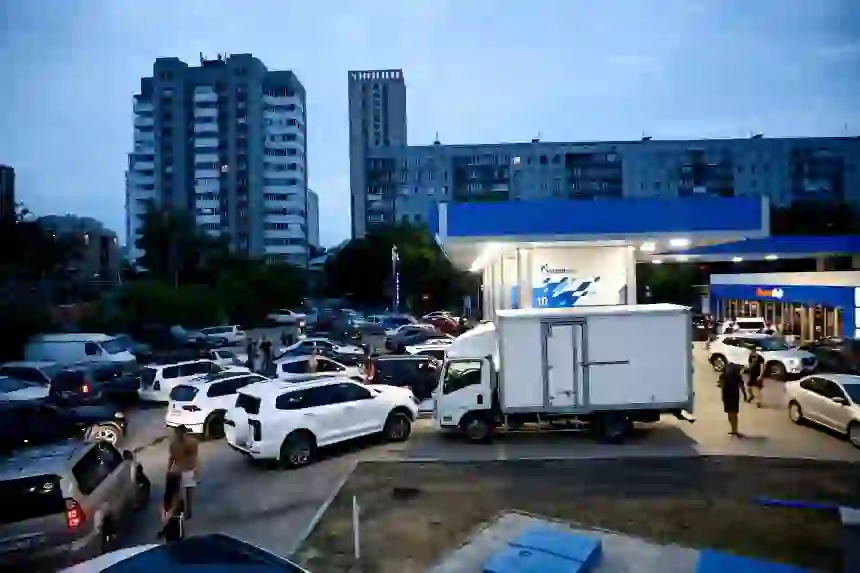
Despite the ban, fuel shortages have become a daily reality for many Russians. In cities such as Moscow and Novosibirsk, and even remote regions, drivers have reported waiting up to 18 hours in line to fill a tank. Gas stations have begun rationing, with some imposing limits of 10 liters per vehicle. The situation has sparked public frustration and raised concerns about the sustainability of the war effort as the government struggles to balance domestic needs with the economic impact of reduced export income.
Global market repercussions: prices, supply chains, and tensions
- •Spiked the day of the ban
- •US inventories rose sharply
- •EU competes with US, Mideast, India
Russia's diesel ban sent shockwaves through global markets. Benchmark diesel prices spiked nearly 13% on the day of the announcement, and the International Energy Agency noted a sharp rise in U.S. diesel inventories as traders scrambled to fill the gap. Europe, which no longer imports Russian diesel due to sanctions, now faces increased competition for fuel from the U.S., Middle East, and India. The ban adds fresh pressure to an already strained supply chain, as the Strait of Hormuz remains a chokepoint amid the ongoing U.S.-Iran conflict.
"It’s pretty bad," Losada said of the ban’s global impact. "On the other side we have (a geopolitical) crisis which is still not fully resolved and flows through Strait of Hormuz are still restrained." - Losada - (see original)
Looking ahead: potential long-term impacts and policy responses
- •More domestic diesel
- •Lost export revenue
- •Public frustration
- •Extended export limits
- •Higher EU farm/logistics costs
- •Energy used as a war tool
Experts warn the ban could have lasting effects beyond July 31. If the war continues to disrupt refining capacity, Russia may need to maintain export restrictions or seek alternative markets. Meanwhile, the European Union could see higher diesel costs for agriculture and logistics, potentially triggering inflationary pressures. On the geopolitical front, the ban underscores how energy policy is being used as a tool of war, with Russia leveraging its fuel exports to influence domestic stability and international relations.
"Russians must feel that their state is waging this war," Zelensky wrote on X. - Zelensky - (see original)
Summary
- •Shore up domestic fuel
- •Keep pumps flowing
- •Rising prices
- •Strained supply chains
- •Heightened geopolitical tension
Russia's abrupt diesel export ban illustrates the fragile intersection of war, energy supply, and global markets. While the immediate goal is to shore up domestic fuel availability, the ripple effects highlight the broader costs of conflict. The coming weeks will reveal whether this temporary measure can stabilize Russia's fuel market or whether deeper adjustments will be required.
- Russia banned diesel exports July 8-31 after Ukrainian drone strikes cut refining capacity by an estimated 200,000 bpd.
- At home, drivers face waits of up to 18 hours and 10-liter rationing; abroad, benchmark diesel spiked nearly 13% on announcement day.
- Effects may outlast July 31, raising EU costs and underscoring energy's role as a tool of war.
- www.theguardian.com/world/2026/jul/09/ukraine-war-briefing-russia-bans-diesel-exports-as-refinery-attacks-trigger-gas-shortages-and-price-spikes
- www.cnn.com/2026/07/09/business/russia-diesel-ban-ukrainian-strikes-intl
- www.politico.eu/article/russia-halts-diesel-exports-after-ukrainian-refinery-strikes/