Table of Contents
Opening
In the summer of 2026, India’s automotive industry found itself at the center of a fiery debate over the nation’s ethanol‑blended petrol policy. A warning issued by the Society of Indian Automobile Manufacturers (SIAM) about potential vehicle damage sparked outrage, forcing the lobby to retract its claim and prompting protests from taxi operators and consumers alike. The controversy highlights the challenges of balancing environmental goals with consumer protection in a rapidly evolving fuel market.
From E10 to E20: The Policy Shift
India’s government introduced a 20 % ethanol blend, known as E20, in 2025 to meet a 2030 target of reducing petroleum imports and cutting greenhouse‑gas emissions. The move replaced the earlier 10 % blend (E10) and was rolled out across roughly 90,000 fuel pumps nationwide. While the policy was praised for its environmental ambition, it also raised questions about vehicle compatibility, fuel quality, and consumer costs.
SIAM’s Warning and the U‑Turn
On July 28, SIAM warned that contaminated E20 fuel could damage vehicle parts, citing elevated chloride and moisture levels. The letter, which was quickly shared by media outlets, led to a wave of consumer anger and a petition for a nationwide assessment of vehicle compatibility. In a surprising move, SIAM withdrew the warning on August 5, stating that the figures it had provided “need authentication through collection of elaborate data across the country followed by a comprehensive consultation.” The retraction came after the petroleum ministry issued a clarification that only two chloride‑contamination cases had been found in 2,000 tests.
"Did the science change overnight, or did the ministry call?" - Nachiket Deshpande - (see original)
Consumer Backlash and the Taxi Association’s Protest
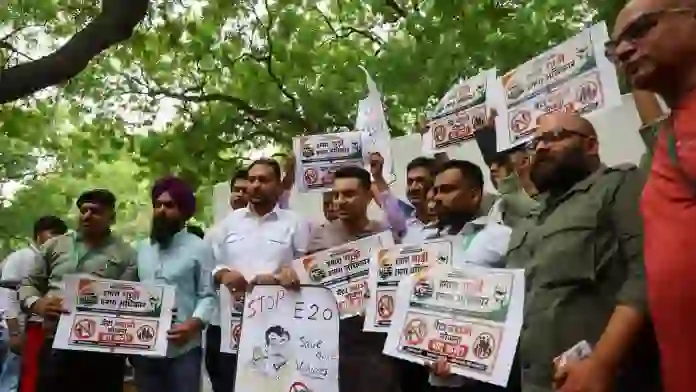
The backlash was not limited to individual owners. The Delhi Taxi and Tourist Transport and Tour Operators Association announced a protest march to Parliament on August 4, demanding the removal of the ethanol policy. Association President Sanjay Samrat warned that the 20 % blend could render millions of vehicles—ranging from motorcycles to taxis—unusable. He described the fuel as “sugarcane juice” that would damage vehicles and upset consumers, calling the policy a “conspiracy” that turns vehicles into scrap.
"Ever since our honourable Nitin Gadkari Sahab became the Transport Minister, we have had to face difficulties; we have been suffering for more than 10 years. Our concerns are being continuously ignored. And he has added a chapter to this such that earlier we were suffering financial and mental losses, and now he has also set up a way to mess with our minds. This sugarcane juice that is being given to us in the name of ethanol—our vehicles will get damaged later, but it messes with our minds. We feel cheated when we go to the petrol pump; upon spending ₹100 on petrol, we are given 20% ethanol in the name of sugarcane juice, so our minds get upset right then. We feel like we are not in independent India; perhaps either we have come to another country, or in another country it is not our government ruling our nation, but some foreign government is ruling," - Sanjay Samrat - (see original)
Technical Concerns: Contamination, Corrosion, and Moisture
Both SIAM and the taxi association pointed to technical issues with E20. SIAM’s letter highlighted that high chloride concentrations and moisture could corrode engine components, especially those in direct contact with fuel or exhaust gases. The ministry’s data, however, suggested that contamination was rare, with only two chloride‑positive samples out of 2,000 tests. Critics argue that the sample size may not reflect nationwide conditions and that the fuel’s higher ethanol content could still accelerate wear in older engines not designed for E20.
Government Response and the Road Ahead
In response to the controversy, the Ministry of Petroleum and Natural Gas clarified that the EBP programme had been implemented through a phased, scientifically validated process involving NITI Aayog, automobile manufacturers, oil marketing companies, and research bodies such as the Automotive Research Association of India. Minister of State for Petroleum and Natural Gas Suresh Gopi confirmed that no comprehensive assessment of vehicle compatibility had yet been conducted, but that the policy had been developed with industry input.
The government’s next steps will likely involve a nationwide audit of fuel quality, a review of vehicle compatibility, and clearer communication to consumers about the risks and benefits of E20. For the automotive industry, the episode underscores the importance of transparent data sharing and proactive engagement with stakeholders to maintain trust while pursuing environmental objectives.
Closing
The E20 debate illustrates the delicate balance between ambitious climate goals and the practical realities of a diverse vehicle fleet. As India moves forward, the lessons learned from this controversy will shape how fuel policies are designed, communicated, and monitored—ensuring that progress toward sustainability does not come at the expense of consumer confidence.