Table of Contents
Opening Section
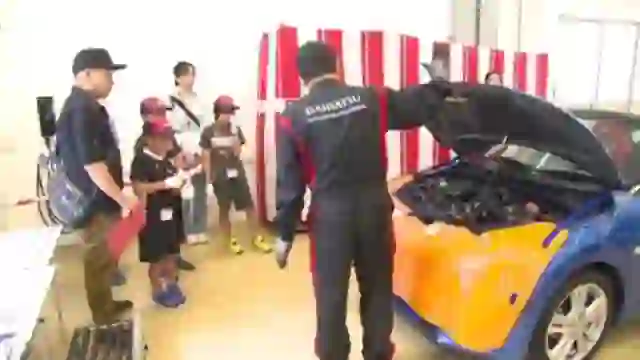
During the summer of 2026, a group of local children gathered in Ehime to explore the heart of a vehicle. The event, organized by Daihatsu, offered more than a simple tour; it was a full‑scale learning experience that turned the mechanics of a car into an engaging adventure. By the time the program concluded, the youngsters had moved from passive observers to active participants, discovering how each component of a car works together to create motion and safety.
A Summer of Discovery
The summer school was held at the Daihatsu dealership in Ehime, a location chosen for its accessibility and its reputation as a community hub. Over the course of three days, a hundred students from the surrounding area were invited to join the program. The schedule was carefully designed to balance theory with practice, ensuring that each child could see the concepts they were learning applied in real time. The event was part of Daihatsu’s ongoing commitment to community education, and it reflected the company’s belief that early exposure to engineering can inspire future careers.
Hands‑On Mechanics
Central to the program was a hands‑on exploration of a car’s internal combustion engine. Students were guided through the engine’s major components—pistons, valves, and the crankshaft—using a disassembled model that allowed them to touch and examine each part. The instructor explained how fuel and air mix in the combustion chamber, how the resulting explosion drives the pistons, and how the motion is transferred to the wheels. By physically manipulating the components, the children could see the cause and effect relationships that underpin automotive technology.
Beyond the engine, the curriculum covered the automatic transmission system. Participants learned how gear ratios are selected and how the transmission shifts to maintain optimal engine performance. The lesson included a demonstration of the torque converter, a device that smooths the transition between engine and drivetrain. The hands‑on approach helped demystify complex mechanical concepts, turning abstract diagrams into tangible experiences.
Safety and Sustainability
Safety was a recurring theme throughout the summer school. The instructors emphasized the importance of protective gear and proper tool handling, ensuring that every child understood the risks associated with mechanical work. The program also highlighted the role of safety features such as airbags, seat belts, and crumple zones, explaining how they protect occupants during collisions. By integrating safety into the learning process, the event reinforced the idea that engineering is not only about performance but also about safeguarding lives.
In addition to safety, the program touched on sustainability. Students were introduced to the concept of electric power and how it differs from traditional combustion engines. The discussion included the benefits of reduced emissions and the growing importance of renewable energy sources in the automotive industry. By presenting sustainability as a natural extension of mechanical knowledge, the summer school encouraged the children to think critically about the future of transportation.
Community and Collaboration
The summer school was a collaborative effort that brought together Daihatsu, local schools, and community volunteers. The dealership’s staff provided the tools and vehicles, while teachers from nearby schools helped facilitate the sessions. The event also featured a small workshop where students could assemble a simple model car, reinforcing the lessons they had learned about assembly and function. This collaborative environment fostered a sense of teamwork and shared learning, illustrating how community resources can be leveraged to create enriching educational experiences.
Participants left the program with a deeper appreciation for the complexity of automotive systems and a newfound confidence in their ability to understand and manipulate mechanical devices. The event also served as a platform for Daihatsu to showcase its commitment to nurturing the next generation of engineers and innovators.
Future Road Ahead
Looking forward, the success of the summer school has sparked plans for expansion. Daihatsu is exploring the possibility of extending the program to other regions, with the goal of reaching a broader audience of young learners. The company is also considering partnerships with universities and technical institutes to provide advanced workshops for older students who wish to delve deeper into automotive engineering.
For the children who attended the 2026 summer school, the experience has already begun to shape their educational trajectories. Many expressed a newfound interest in science and technology, and several have indicated plans to pursue further studies in engineering fields. The program’s impact extends beyond the classroom, inspiring a generation of students to view cars not just as vehicles, but as complex systems that can be understood, improved, and ultimately, built.
Closing Section
The Ehime Daihatsu Summer School proved that hands‑on learning can ignite curiosity and foster a deeper understanding of the world around us. By turning a car’s inner workings into an interactive lesson, the program bridged the gap between theory and practice, leaving a lasting impression on a generation of young minds. As the automotive industry continues to evolve, initiatives like this will play a crucial role in preparing students to meet the challenges and opportunities of tomorrow.