Table of Contents
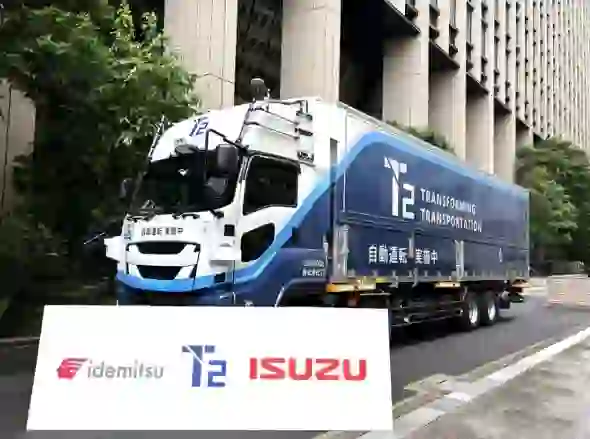
In a move that could reshape freight logistics, Denso's renewable diesel will power autonomous trucks on Japan's public roads in July 2026. Denso, autonomous-driving pioneer T2 and an undisclosed third partner will test 100% renewable diesel—known as IRD—over a 500-kilometre route between Tokyo and Osaka. The experiment is more than a self-driving showcase: it is a test of whether clean fuels can meet the demanding needs of long-haul trucking.
Fueling the Future: Clean Fuel Powers an Autonomous Truck Trial
What sets this trial apart is that it evaluates two things at once—clean fuel and autonomous driving—under near-operational conditions. The trucks run on 100% renewable diesel made from feedstocks such as waste oil, proving out its performance on a long-distance trunk route.
Why Renewable Diesel Matters for Heavy-Duty Transport
- •Great for short urban delivery
- •Trail on range and payload long-haul
- •Depend on charging infrastructure
- •Made from waste oil & bio-feedstocks
- •Energy density on par with diesel
- •Drop-in replacement for engines
Electric vehicles are attractive for short-range urban deliveries but struggle to match the range and payload of diesel trucks on long hauls. Renewable diesel, produced from waste vegetable oil and other bio-feedstocks, is a drop-in replacement that retains the high energy density heavy-duty engines require. By running on 100% renewable diesel, the trial aims to show that fuel efficiency, emissions and engine reliability can be maintained—or improved—without sacrificing performance.
The 500-Kilometre Test: From Tokyo to Osaka
The chosen corridor spans about 500 km of high-speed highways, mirroring the daily routes of many freight operators. Over this distance the autonomous trucks run on IRD, letting researchers collect data on fuel consumption, CO₂ emissions and the fuel's impact on engine wear. The test also evaluates how the fuel and the autonomous system interact, ensuring the vehicle's sensors and control algorithms perform reliably under real-world conditions.
Three Companies, One Vision
Denso, a global leader in automotive components, provides the renewable diesel and the engine technology that can handle the bio-fuel's unique properties. T2, a startup focused on autonomous driving, supplies the self-driving platform that navigates the highway without human intervention. The third partner, whose identity is not disclosed in the public brief, is expected to contribute logistics expertise and data-analysis capabilities.
Key Performance Indicators for the Trial
The trial tracks five indicators: fuel efficiency (km/L of IRD versus conventional diesel), emissions (CO₂, NOx and particulate matter under real-world driving), engine reliability (maintenance intervals and component wear), autonomous-system safety (any incidents or near-misses), and operational feasibility (how the fuel and autonomous system integrate into existing logistics workflows).
Implications for Japan's Green Logistics Strategy
- •If successful, freight
- •emissions cut by up to 30%
Japan's Ministry of Land, Infrastructure, Transport and Tourism has set ambitious targets to cut CO₂ emissions from the transport sector. The 2026 trial aligns with these goals by showing that renewable diesel can serve as a bridge technology while autonomous driving reduces human error and improves fuel economy. If successful, the partnership could pave the way for nationwide deployment of clean-fuel autonomous trucks, potentially cutting freight emissions by up to 30%.
Challenges and Next Steps
- •May affect lubrication / need part tweaks
- •Navigating complex traffic
- •Public-road approval still evolving
- •Longer routes, varied traffic
- •Assess commercial viability with operators
- •Scale the fleet into supply chains
Despite the promise, hurdles remain. Renewable diesel can affect engine lubrication and may require adjustments to fuel-system components. The trucks must navigate complex traffic scenarios, and the trial must prove that sensors can handle subtle changes in fuel behaviour. Regulatory approval for public-road trials of autonomous vehicles is still evolving, so the partnership will need to work closely with authorities on safety standards. Looking ahead, the team plans to expand to longer routes and varied traffic, collaborate with other operators on commercial viability, and—if the data confirms the gains—scale up the fleet and integrate renewable diesel into major freight supply chains.
Conclusion: A Clean-Fuel, Driver-Free Future on the Horizon
The July 2026 public-road trial marks a pivotal moment for Japan's freight industry. By pairing Denso's renewable diesel with T2's autonomous platform, the partnership tests a holistic solution that could lower emissions, cut operating costs and enhance safety. Whether a fully autonomous, clean-fuel logistics network proves feasible remains to be seen, but the groundwork is being laid for a future where trucks travel long distances without drivers and with zero fossil-fuel emissions.